
10.15.26 | Guest Lecturer Dr. Sheri Kling | Inanna Imaginalis: Dying and Rising in Story and Song

Description From the stories of Jonah in the belly of the whale or Persephone in the Underworld to Star Wars, The Matrix and Lord of the Rings, the journey to individuation and wholeness always includes a stop in wilderness places we’d rather not visit. But sometimes we don’t have a choice. And whether it’s divorce, […]
9.10.26 | Lecture: Alchemy & The Individuation Process

In 1928, after Jung received the Chinese alchemical text titled The Secret of the Golden Flower from the sinologist Richard Wilhelm, he closed the Red Book mid-sentence and devoted the next thirty-plus years of his life to researching and reflecting on the images, writings, and practices of the Western alchemical tradition. Jung was the first […]
6.17.26 | Encountering the Psyche | Module 6: Typology | Virtual Q & A Discussion
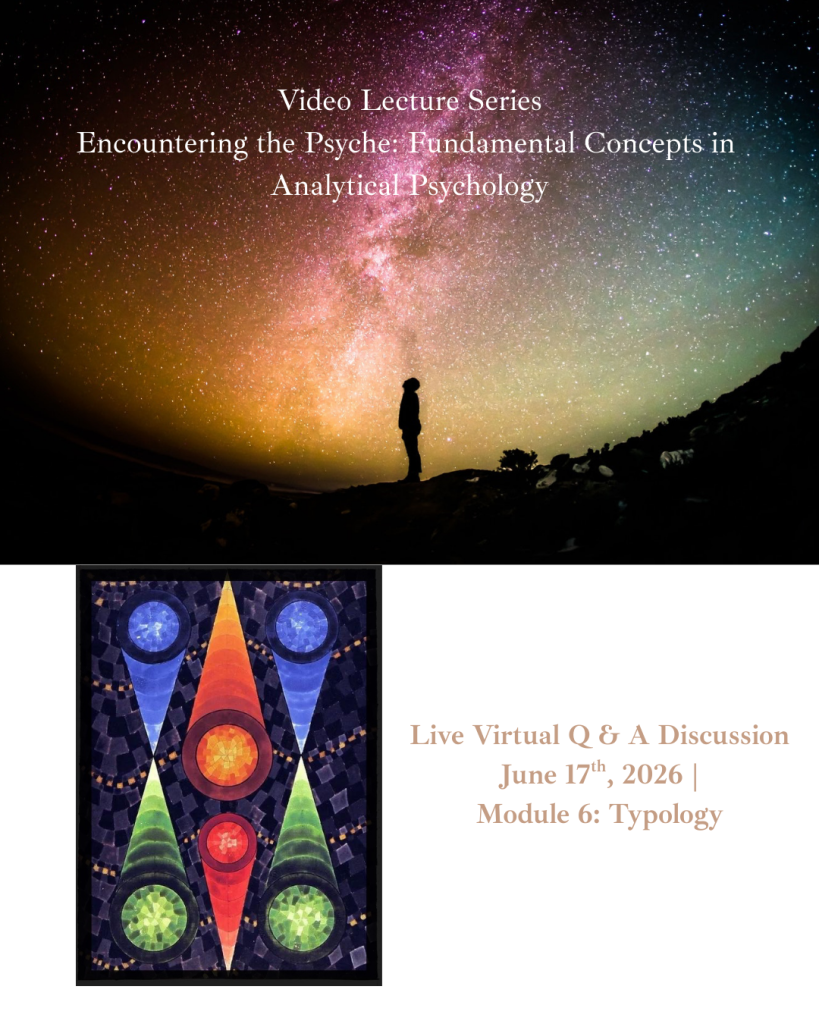
You are invited to embark on a tour of the psyche as mapped by Carl Gustav Jung, to be led by Angelo Spoto — Jungian therapist of over 35 years, author of Jung’s Typology in Perspective, and Education Director of the C.G. Jung Library of Tampa Bay. Module 6: Typology is the 6th in a […]
5.13.26 | Encountering the Psyche | Module 5: Ego | Virtual Q & A Discussion
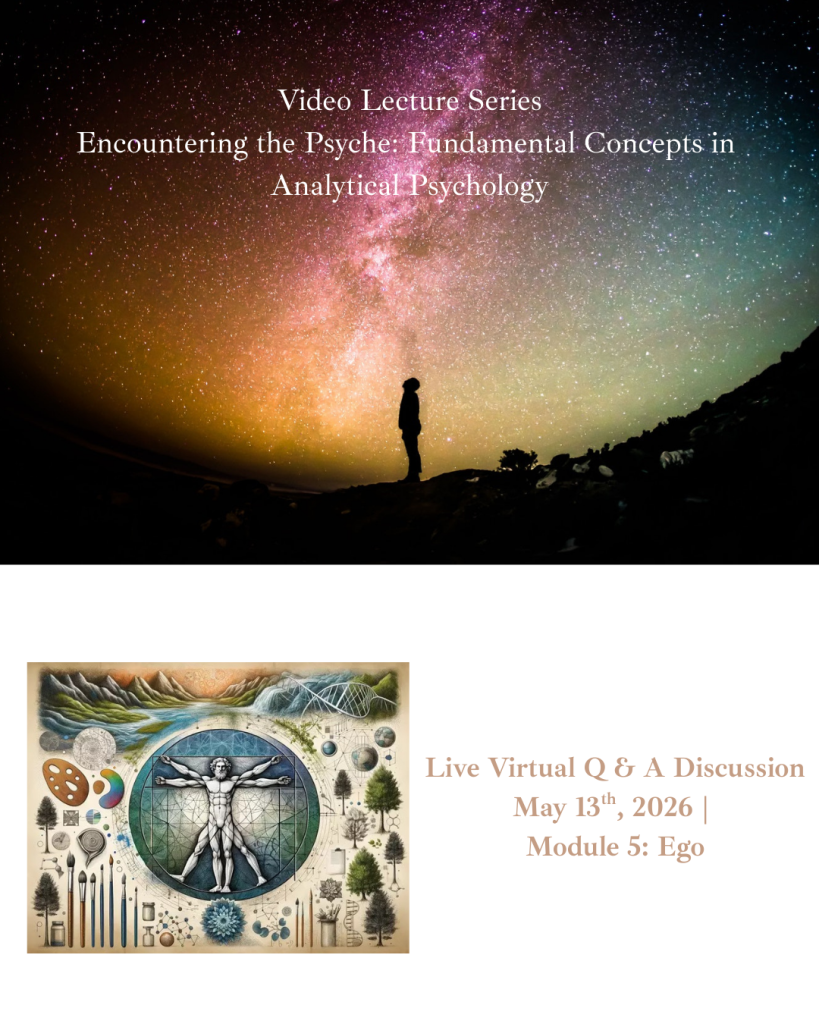
You are invited to embark on a tour of the psyche as mapped by Carl Gustav Jung, to be led by Angelo Spoto — Jungian therapist of over 35 years, author of Jung’s Typology in Perspective, and Education Director of the C.G. Jung Library of Tampa Bay. Module 5: Ego is the 5th in a […]
4.16.26 | Lecture: The Ten Ox-Herding Pictures
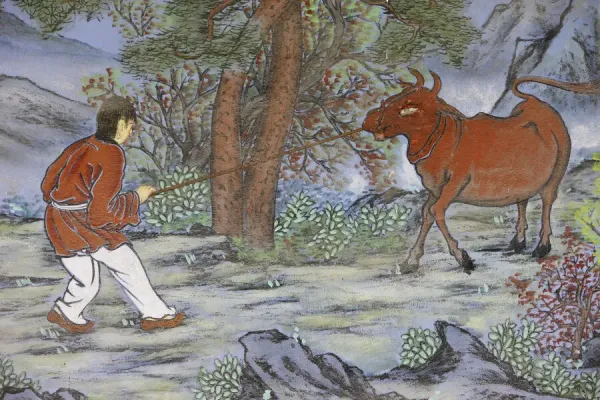
The Ten Ox-Herding Pictures are an ancient allegory dating back to 11th or 12th century China, used to illustrate the path to enlightenment. We are going to look at the series of ten paintings through the lens of Jungian psychology. The connection with the individuation process as described by Jung over the course of 20 […]
11.15.25 | Guest Presenter: Dr. Michael Conforti | Workshop: Dreams: Lifting the Veil to the Ineffable
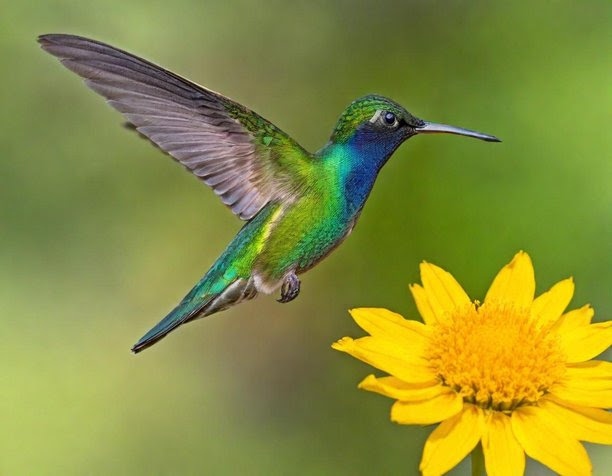
“The dream is a little hidden door in the innermost and most secret recesses of the soul, opening into that cosmic night which was psyche long before there was any ego-consciousness, and which will remain psyche no matter how far our ego-consciousness extends.” – C.G. Jung It is the simplicity of the dream, communicating to […]
11.13.25 | Guest Lecturer (HYBRID EVENT): Dr. Michael Conforti: The Voice of Psyche and What Shapes a Life ~ The Presence of Archetypes in our Life and in Dreams
“If (one) devotes (oneself) to the instructions of one’s own unconscious, it can bestow this gift of renewal, so that suddenly life, which has been stale and dull, turns into a rich unending inner adventure, full of creative possibilities.” Marie-Louise von Franz It is the brilliance and inherent spirituality of Jung and von Franz that […]
9.18.25 | Lecture: Living Into Whole Type

For decades, Jung’s type theory has arguably enjoyed a popularity among the public-at-large even beyond the formulation of his archetypal hypothesis, his ideas on synchronicity, and his original and creative work on alchemy. For the adventuresome reader, Jung’s massive volume Psychological Types still remains a tour de force in the history of ideas. Expanding on […]
8.21.25 | Lecture: The Structure & Dynamics of the Psyche

Jung once stated that all psychological models are confessions of the individuals who developed them. Today, there are 400 models in psychology. Is Jung saying that all models are limited by the subject confessing his or her own “truth?” Is there no Truth, capital T? Yes and No. The subjective factor has always been acknowledged […]
10.23.25 | Lecture: Systema Munditotius

Jung’s Red Book, published in 2009 and composed between 1913 -1928, has become the centerpiece to Jungian studies, radiating into everything written before and after. In 1916, Jung summarized his visionary experiences in symbolic form by painting his first and perhaps most important mandala, given in appendix A of the Red Book. Along with Seven Sermons to the Dead, […]