
5.1.25 | Marie-Louise Von Franz | The Psychological Meaning of Redemption Motifs in Fairy Tales (Part II of II) Free Reading Discussion
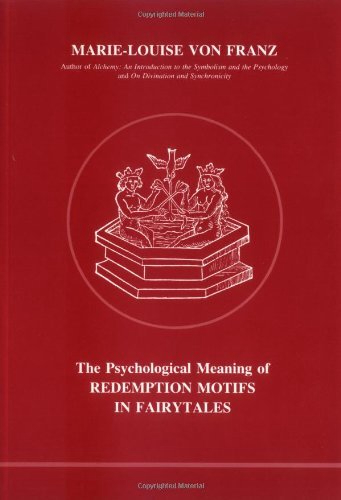
Why are we often at odds with ourselves? What lies behind our conflicts and relationship problems? Have they any purpose? This book, originally a series of lectures at the C.G. Jung Institute in Zurich, explores these issues and many others. It is unique in its demonstration of the significance of fairytales for an understanding of […]
4.3.25 | Marie-Louise Von Franz | The Psychological Meaning of Redemption Motifs in Fairy Tales(Free Reading Discussion)
Why are we often at odds with ourselves? What lies behind our conflicts and relationship problems? Have they any purpose? This book, originally a series of lectures at the C.G. Jung Institute in Zurich, explores these issues and many others. It is unique in its demonstration of the significance of fairytales for an understanding of […]
3.6.25 | Hermann Hesse: Steppenwolf | Part II of II (Free Reading Discussion)

Steppenwolf is a poetical self-portrait of a man who felt himself to be half-human and half-wolf. This Faust-like and magical story is evidence of Hesse’s searching philosophy and extraordinary sense of humanity as he tells of the humanization of a middle-aged misanthrope. Yet his novel can also be seen as a plea for rigorous self-examination […]
2.6.25 | Hermann Hesse: Steppenwolf | Part I of II (Free Reading Discussion)
Steppenwolf is a poetical self-portrait of a man who felt himself to be half-human and half-wolf. This Faust-like and magical story is evidence of Hesse’s searching philosophy and extraordinary sense of humanity as he tells of the humanization of a middle-aged misanthrope. Yet his novel can also be seen as a plea for rigorous self-examination […]