
9.18.25 | Lecture: Living Into Whole Type

For decades, Jung’s type theory has arguably enjoyed a popularity among the public-at-large even beyond the formulation of his archetypal hypothesis, his ideas on synchronicity, and his original and creative work on alchemy. For the adventuresome reader, Jung’s massive volume Psychological Types still remains a tour de force in the history of ideas. Expanding on […]
8.21.25 | Lecture: The Structure & Dynamics of the Psyche

Jung once stated that all psychological models are confessions of the individuals who developed them. Today, there are 400 models in psychology. Is Jung saying that all models are limited by the subject confessing his or her own “truth?” Is there no Truth, capital T? Yes and No. The subjective factor has always been acknowledged […]
10.23.25 | Lecture: Systema Munditotius

Jung’s Red Book, published in 2009 and composed between 1913 -1928, has become the centerpiece to Jungian studies, radiating into everything written before and after. In 1916, Jung summarized his visionary experiences in symbolic form by painting his first and perhaps most important mandala, given in appendix A of the Red Book. Along with Seven Sermons to the Dead, […]
5.22.25 |Tower on the Marsh—A Film Screening and Discussion on the Life & Work of Christiana Morgan
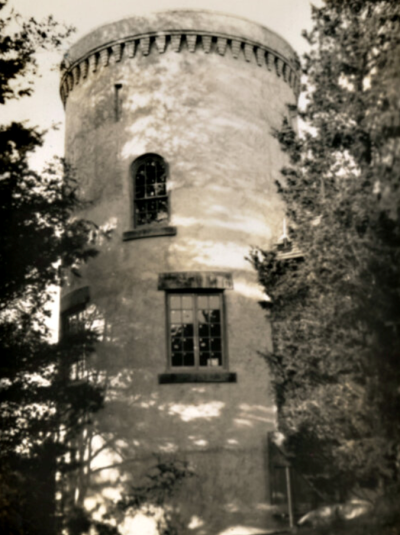
The Library welcomes Hilary Morgan, filmmaker and granddaughter of Christiana Morgan, the subject of Jung’s Vision Seminars, held from 1930-1934. In attendance at these seminars were such participants as Erich Neumann, Barabara Hannah, Toni Wolff, C.A. Meier, Gerhard Adler, Eleanor Berinte, Linda Fierz-David, Michael Fordham, Esther Harding, and Mary Gordon among others, many of whom […]
2.20.25 | Lecture: The Significance of the Ego in Analytical Psychology

It is easy to dismiss the Ego as the villain in life or glorify it as the wonder of wonders. However, in Analytical Psychology, the Ego is neither sinner nor saint, or perhaps it is both sinner and saint. The Ego, or ego complex, is the central structure in our conscious world. It implicates issues […]
11.17.2022 | Lecture: The I Ching in the Context of Jung’s Life and Work

The I Ching, specifically the Wilhelm/Baynes edition commissioned by Jung, continues to be the all-time bestseller in the Bollingen Series, a highly-acclaimed published collection which itself places Jung’s Collected Works as its centerpiece. How did this ancient Eastern text become intertwined with Jung’s life and work? What role does the I Ching play in Jungian […]
Engaging the Red Book

About the Course Anyone even remotely interested in Jung or the field of Analytical Psychology was riveted by the premiere event and release of Liber Novus on October 7, 2009 at the Rubin Museum in New York City. Known more widely as Jung’s Red Book, this singular book is a vivid and dramatic record of Jung’s active imagination […]
Lecture: Fairy Tales in Analytical Psychology
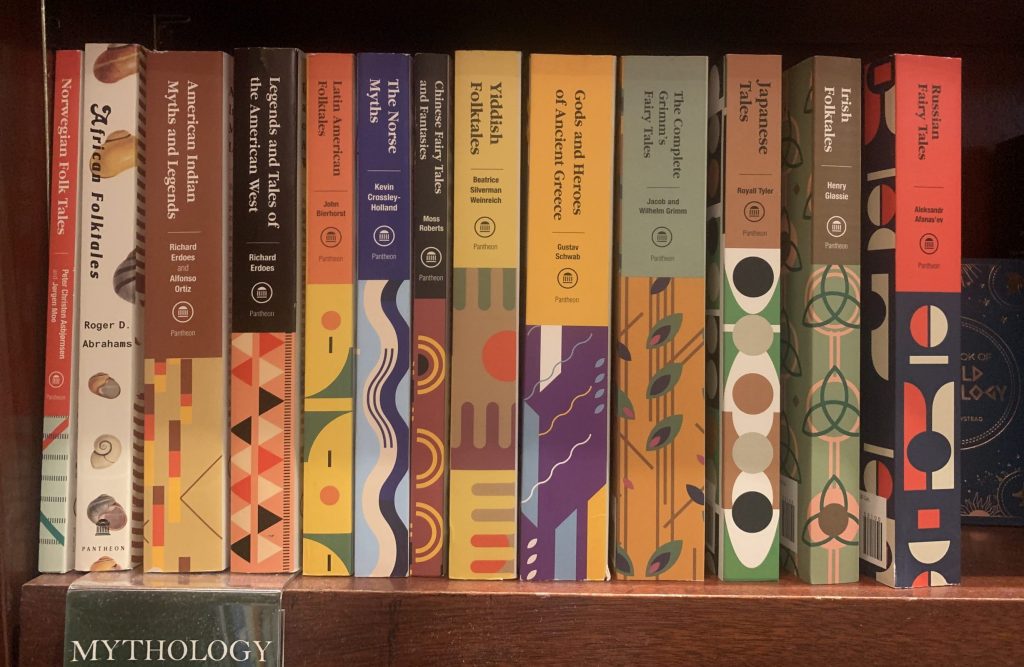
“In fairy tales one can best discover the comparative anatomy of the psyche.” C.G. Jung Jung felt that the method of”amplification” could enrich the individual’s experience of the collective unconscious. Specifically, he claimed that by looking deeply into alchemy, mythology, folklore, and fairy tales, one would better be able to see and relate to the archetypal […]
Lecture: The I Ching in the Context of Jung’s Life and Work

The I Ching, specifically the Wilhelm/Baynes edition commissioned by Jung, continues to be the all-time bestseller in the Bollingen Series, a highly-acclaimed published collection which itself places Jung’s Collected Works as its centerpiece. How did this ancient Eastern text become intertwined with Jung’s life and work? What role does the I Ching play in Jungian […]
Lecture: Jung’s Relationship to the Arts – A Complex Situation
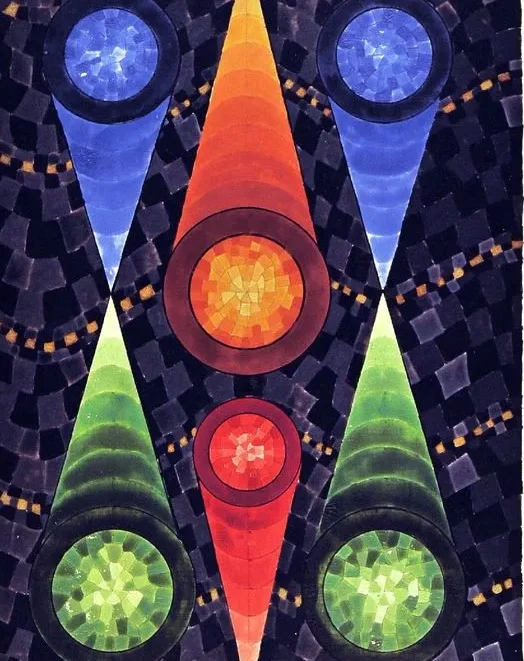
Jung’s first encounters with his anima are documented in the fantasies, dreams, paintings, and intra-psychic dialogues that filled the Black Books and would subsequently find expression in the Red Book. They are striking, even tortuous on many accounts, and one of the conflicts revealed therein centers around the subject of art. Why was Jung at […]